April 29, 2026 • Roxanne Flair • 8 min reading time • Prices verified June 4, 2026
Turntables for Vinyl Lovers and DJs: Where the Entry-Level Chasm Bites Hardest
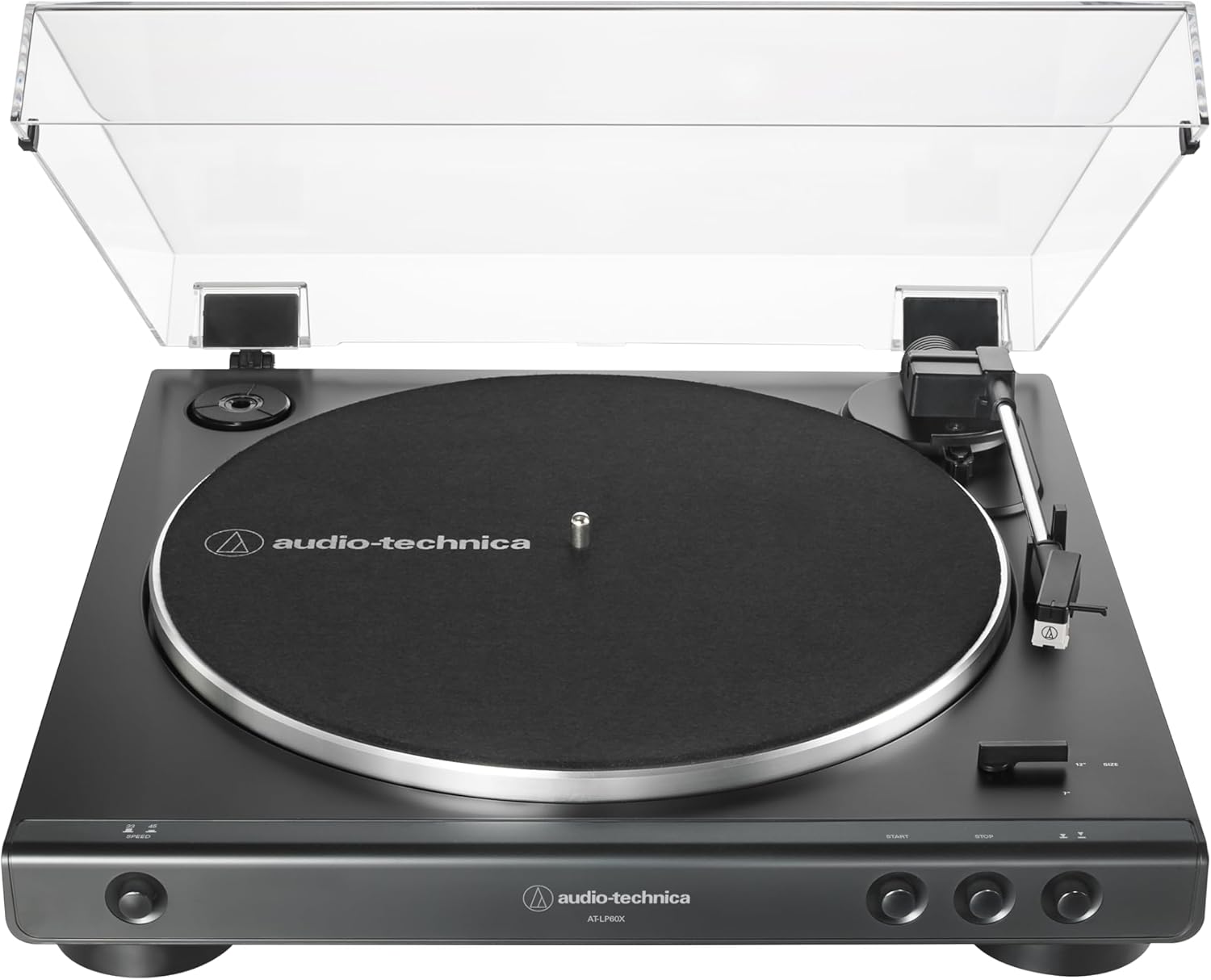
A turntable is, at its most basic, a spinning platter that holds a vinyl record while a needle (called a stylus) traces the tiny grooves cut into the disc and converts that physical wiggle into sound. Simple enough in theory. In practice, the engineering required to do that job well — without chewing up your records, without wobbling off tempo, without buzzing like a broken radiator — separates a $99 suitcase player from a $3,500 professional deck as dramatically as a bicycle separates from a motorcycle. If you’re shopping for a turntable right now, whether to spin a disco collection in your living room or to scratch and mix at paid gigs, this guide maps the landscape honestly: what the tiers actually deliver, where the hidden costs live, and which specific tables are worth your money at each budget level.
The central tension every buyer runs into is that turntables serve two audiences with genuinely different requirements. Vinyl listeners (audiophiles, collectors, casual home spinners) care about sound fidelity, record preservation, and cartridge flexibility. DJs — especially those doing mobile gigs or club sets — care about motor torque (how fast the platter reaches full speed and how resistant it is to being slowed by a hand), pitch stability, and physical durability under nightly punishment. Some tables do both. Most are optimized for one. Knowing which camp you’re in before you buy saves real money.
The Entry-Level Chasm: Why $99–$200 Costs More Than It Saves
Let’s start with the honest warning that the vinyl-revival boom made easy to ignore. The Vinyl Factory has explicitly documented that cheap all-in-one turntables — the kind with built-in speakers, a plastic platter, and a weighted ceramic cartridge — apply far too much tracking force (the downward pressure the stylus exerts on the groove) to the record. A properly set-up cartridge should track somewhere between 1.5 and 3 grams depending on the model. Budget all-in-ones routinely apply 5–7 grams or more. The result: audible distortion, and gradual but irreversible groove wear that degrades your record collection over months of play.
Wirecutter’s turntable guide corroborates this directly, explicitly steering readers away from the sub-$150 category for anyone who owns records they care about. The cheap decks aren’t a gateway — they’re a trap.
The floor for responsible buying is roughly $250–$300 for a listener, and $800+ for a DJ who needs real torque and durability. Here’s what that chasm looks like numerically:
| Price Range | Platter Type | Motor | Typical Tracking Force | DJ-Ready? |
|---|---|---|---|---|
| $99–$199 | Plastic, belt-drive | AC synchronous | 4–7g (often fixed) | No |
| $250–$450 | Aluminum, belt-drive | DC servo | 1.5–3g (adjustable) | Rarely |
| $500–$900 | Aluminum, direct-drive | DC servo | 1.5–2.5g | Entry-DJ capable |
| $1,000–$3,500+ | Cast aluminum, direct-drive | Quartz-locked | 1–3g | Professional |
Listener Tier: $250–$700, Where the Real Decisions Live
If you’re building a home listening setup — spinning original Salsoul pressings, Philadelphia International 12-inches, or anything from your Discogs haul — the relevant question isn’t “DJ or not?” It’s: how much do I want to spend on cartridges, and how much does setup bother me?
Belt-drive tables (where a rubber belt connects the motor to the platter) are the dominant design at this tier. The belt isolates motor vibration from the platter, which audiophiles prefer for lower noise floors. The tradeoff: belts degrade over 3–5 years and need replacement (typically $10–$30, but a minor friction point), and the platter takes a second or two to reach speed — no big deal for listening, a dealbreaker for DJing.
Audio-Technica AT-LP120XUSB (~$299): This is the table Wirecutter has consistently pointed to as the sensible starting point for most buyers. It’s a direct-drive design (unusual at this price — more on that below), ships with an AT-VM95E cartridge that’s genuinely respectable, and includes a built-in phono preamp (phono preamp = the amplification stage that boosts a turntable’s signal to a level your speakers or receiver can use — most modern receivers don’t have this built in, so it matters). Owners report it’s easy to set up and sounds substantially better than anything below it. It’s not a DJ table in any serious sense, but it holds its own.
Pro-Ject Debut Carbon EVO ($549): This is where the audiophile path diverges from the budget path meaningfully. Sound On Sound’s coverage of the Pro-Ject lineup consistently highlights the Debut Carbon’s tonearm (the arm that holds the cartridge) as a step-change improvement — a carbon-fiber tube that resonates less than the aluminum or plastic arms on cheaper decks. It ships with an Ortofon 2M Red cartridge ($100 standalone), and the upgrade path to better cartridges (2M Blue at ~$250, 2M Bronze at ~$450) is well-documented. If you’re buying records you care about and plan to keep this table for a decade, the Debut Carbon EVO is the one we’d recommend.
At $700 (Rega Planar 1 Plus, ~$745): Stereophile’s coverage of Rega’s Planar series treats them as serious audiophile tools at non-audiophile prices. The tonearm geometry is purpose-designed for their own cartridges and resists the mix-and-match approach. Great for committed listeners who want to stop thinking about upgrades. Less flexible than Pro-Ject for cartridge swapping.
DJ Tier: Direct Drive, Torque, and Why the Technics Standard Still Runs Everything
For DJs — particularly those doing mobile events, club nights, or any context where you’re manually manipulating records — direct-drive is non-negotiable. In a direct-drive table, the motor sits directly beneath the platter center and spins it without a belt. This means:
- Near-instant start torque — the platter hits 33 or 45 RPM in a fraction of a second rather than drifting up gradually
- Resistance to hand pressure — when you slow or spin a record by hand (for cueing, scratching, or beat-matching), the motor fights back and maintains speed
- Belt-less durability — one fewer wear component in a high-use environment
DJ Mag’s buyers guide frames the DJ turntable market as effectively a two-brand conversation with a few credible challengers. The industry benchmark remains the Technics SL-1200 series.
Technics SL-1200MK7 (~$1,299): Analog Planet’s review of the MK7 describes it as the closest Technics has come to the legendary SL-1200MK2 (produced 1978–2010 and still the most-imitated turntable in DJ history) at a modern price point. The quartz-locked motor delivers measurably consistent speed, the tonearm is stable enough to pair with high-compliance cartridges, and the build quality is the standard against which mobile DJs measure everything else. At roughly $1,300, it’s an investment — but owners consistently report running these tables nightly for years with minimal maintenance beyond stylus replacement.
Reloop RP-8000 MK2 (~$849): For DJs who need MIDI output (connecting the turntable to DJ software like Serato or Rekordbox for digital-vinyl control), the Reloop punches into a space the Technics doesn’t occupy at this price. DJ Mag has noted it as one of the more feature-complete professional alternatives for the DVS (Digital Vinyl System) workflow. The torque is strong; the build is solid. It’s not a Technics, but the gap has narrowed considerably.
Entry DJ tier — Audio-Technica AT-LP1240-USB XP (~$399): If you’re a mobile DJ testing whether vinyl is worth the investment before committing to professional hardware, the AT-LP1240 is the honest stepping stone. It has real direct-drive torque, adjustable tracking force, a replaceable headshell (the removable cartridge mount — important for DJs who swap cartridges by genre or technique), and a switchable phono preamp. Experienced DJs in forum communities consistently note that it feels like a “real” turntable without the professional price. It’s not what you’d run at a club residency, but it won’t embarrass you at a mobile event.
Cartridges: The Component Most Buyers Under-Budget
The cartridge is the assembly at the end of the tonearm that holds the stylus (needle). It’s the component in most direct contact with your records and the one that most dramatically affects sound quality and record wear. It is also — and this bears saying plainly — chronically under-budgeted by first-time buyers.
A Technics SL-1200MK7 shipped without a cartridge. Budget at minimum $150–$200 for a respectable entry-level option; the Ortofon 2M Red ($120) is the standard recommendation for listener setups, while the Ortofon Concorde DJ MKII ($250–$300) remains the de-facto choice for DJ applications because its integrated headshell simplifies installation and its elliptical stylus tracks DJ use-patterns well.
For serious vinyl collectors pairing with a Pro-Ject or Rega, the Ortofon 2M Blue (~$250) is the cartridge Stereophile and multiple analog-focused publications treat as the point where diminishing returns haven’t yet set in aggressively. The upgrade to 2M Bronze adds refinement; whether that refinement justifies the additional $200 depends entirely on your playback chain and your ears.
The Decision Frame: Which Table, and When
Here’s the honest if-then read on where you are right now:
If you’re a home listener with a Discogs habit and records you care about: Start at the Pro-Ject Debut Carbon EVO ($549) with the Ortofon 2M Red or Blue. Don’t touch anything below $250, and factor the cartridge cost into your total budget before you finalize.
If you’re a mobile DJ who wants to spin vinyl at events and hasn’t committed to professional hardware yet: The Audio-Technica AT-LP1240-USB XP at $399 is the responsible floor. Pair it with Ortofon Concorde DJ MKII cartridges and budget the full $650–$700 system.
If you’re a working DJ doing regular paid gigs or building a permanent setup: The Technics SL-1200MK7 at $1,299 (typically purchased as a pair, so $2,600 before cartridges) is the right answer and has been for forty years. The Reloop RP-8000 MK2 is the credible alternative if DVS integration matters to your workflow.
If someone is trying to talk you into a $150 all-in-one because “it plays records”: It does play records, the same way a garden hose washes a car. Your collection deserves better.
The entry-level chasm is real, it’s well-documented, and it bites hardest precisely because the cheap options look complete. They’re not. The right table, bought once, is the better math every time.