May 22, 2026 • Roxanne Flair • 9 min reading time • Prices verified June 4, 2026
Giant Inflatable Disco Balls: The Event Decorator's Guide to Going Big Without Breaking Physics
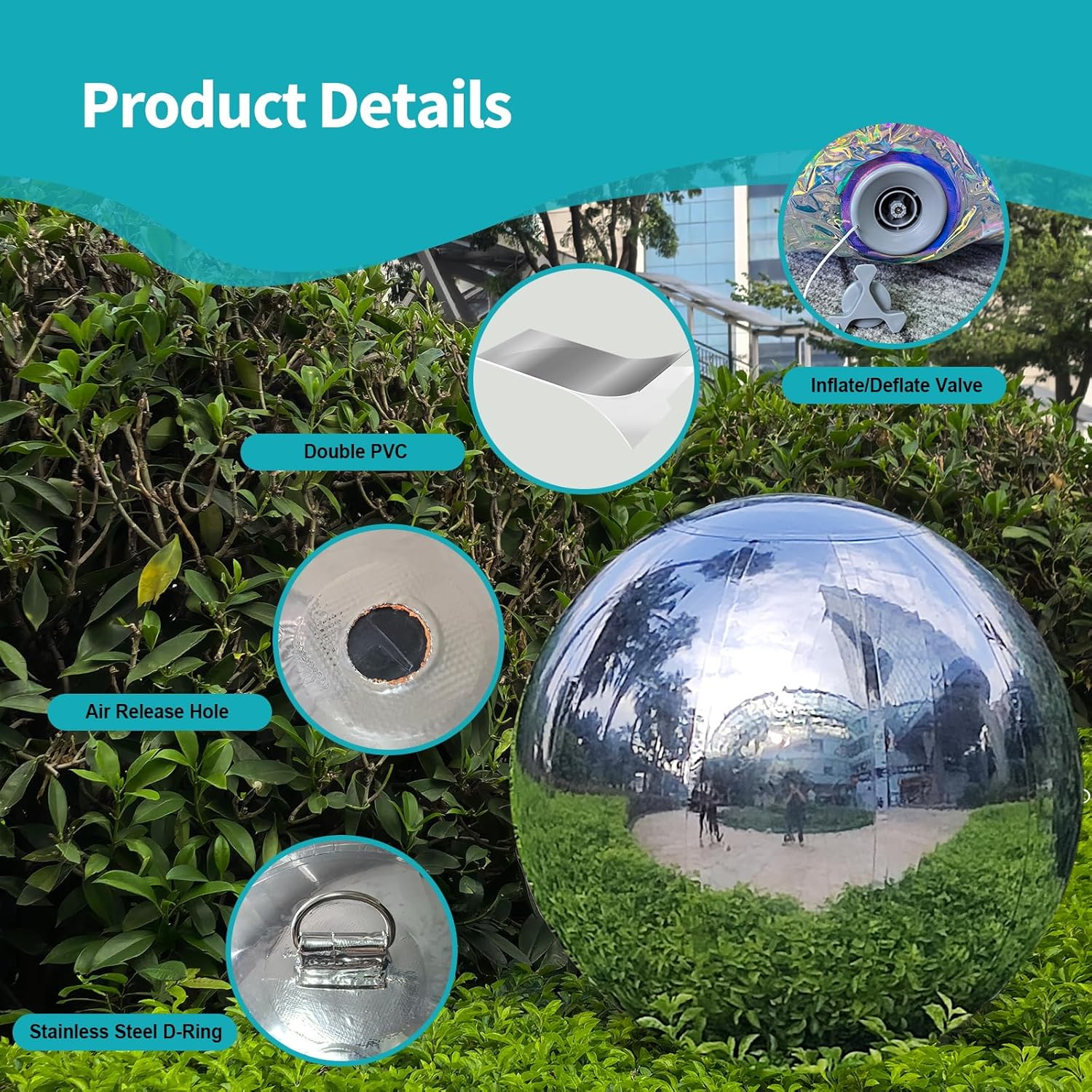
If you’ve been scrolling through event photos and wondering how event decorators get those massive silver disco balls — the kind that fill an entire corner of a warehouse venue or float above a dance floor like a very glamorous moon — the answer is usually not glass. It’s air. Giant inflatable disco balls are exactly what they sound like: large PVC or nylon spheres printed or laminated with mirror-effect material, filled with air like a balloon, and hung or suspended overhead. They can run from two feet across (a statement piece for a living room party) all the way to twelve feet or more (the kind you see at festival installations). The appeal is obvious: you get the visual drama of a massive mirror ball at a fraction of the weight and cost. But the “fraction of the weight” part is where a lot of decorators get into trouble, because even an inflatable has real load implications once you factor in the rigging hardware, the air pressure, and the wind if you’re outdoors. This guide walks you through the decision framework — sizing, structural math, sourcing tiers, and the questions you need to answer before you sign a venue contract.
| EDITOR'S PICK[Gold 6PCS Inflatable Mirror Bal…](https://www.amazon.com/dp/B0FNC7JW6N?tag=greenflower20-20) | Mid-tier[Inflatable Mirror Ball](https://www.amazon.com/dp/B0FN414YCT?tag=greenflower20-20) | Budget pick[Silver Inflatable Mirror Ball R…](https://www.amazon.com/dp/B0F8QMNN85?tag=greenflower20-20) | |
|---|---|---|---|
| Quantity | 6 pcs | 1 pcs | 1 piece |
| Diameter | — | 1.5m/59in | 0.6m/23.6in |
| Pump included | ✓ | — | ✗ |
| Price | $639.99 | $149.99 | $66.49 |
| See on Amazon → | See on Amazon → | See on Amazon → |
Sizing Decisions: What “Big” Actually Means in a Real Space
The most common mistake practitioners make when speccing an inflatable disco ball is choosing the size based on catalog photos rather than ceiling height and floor area. A six-foot inflatable in a room with ten-foot ceilings doesn’t read as dramatic — it reads as a balloon that’s too close to your guests’ heads. Apartment Therapy’s roundup of disco party accessories notes that mirror-effect inflatables need a “clear visual buffer” of at least one to one-and-a-half ball-diameters between the bottom of the piece and the eye line of the crowd to land as intended.
The working rule that circulates among event rental operators is a 1:4 ratio — diameter to ceiling clearance. A four-foot ball needs a ceiling of at least sixteen feet to hang at a height that looks deliberate. A six-foot ball wants twenty-four feet of ceiling, minimum. That math disqualifies a lot of venues. If your ceiling is twelve to fourteen feet (a standard hotel ballroom), you’re looking at a two-to-three-foot inflatable as a ceiling piece, or you’re repositioning the ball to a corner installation, a photo-moment wall, or a ground-level prop.
By the numbers:
| Ball Diameter | Recommended Minimum Ceiling | Approximate Rigged Weight (ball + hardware) | Typical Rental Price Range |
|---|---|---|---|
| 2 ft | 8 ft | 2–4 lbs | $40–$80 |
| 4 ft | 16 ft | 6–12 lbs | $120–$220 |
| 6 ft | 24 ft | 15–28 lbs | $280–$500 |
| 10 ft | 40 ft | 50–90 lbs | $800–$1,800 |
Weights include inflation air and typical rigging hardware. Manufacturer specs and rental operator listings as of May 2026.
Outdoor installs add a wind-load variable that eliminates the inflatable option for anything above a light breeze. At sustained winds of fifteen miles per hour, a six-foot inflatable generates meaningful lateral force on its anchor point — enough to stress standard event truss or a tent’s ridge pole in ways the structure wasn’t designed for. If you’re doing a tent event or an outdoor activation, consult the PLASA Technical Standards Program’s recommended practices for temporary structures before you specify any aerial element larger than three feet.
Rigging Realities: Where Most Decorators Get Into Trouble
Here’s the uncomfortable truth about inflatable event pieces: the ball itself is almost never the structural problem. The rigging system is. A properly rated rigging point — meaning a steel eyebolt or drop-in anchor rated to the relevant working load limit, inspected by a qualified rigger — can handle a fifty-pound inflatable without drama. The problem is that most venues, especially converted industrial spaces, hotels, and tented venues, have rigging points that were designed for drape hardware and centerpiece hangers, not aerial installations. And venue staff will frequently tell you a ceiling can “handle it” without having any documentation to back that up.
The Event Safety Alliance’s Rigging Safety Guide (2024 edition) is direct on this point: any aerial piece above thirty pounds should have a documented load calculation from a qualified rigger, and the venue should provide written confirmation of rated attachment points before any rigging begins. For the mobile event decorator who doesn’t have a staff rigger, that means building a clause into your venue walkthrough checklist: confirm rigging point ratings in writing before the contract is signed. If the venue can’t produce the documentation, your options are ground-level display, truss-supported installation with your own rated truss system, or a smaller ball that stays under the threshold where venue hardware becomes the critical path.
For balls under twenty pounds — which covers most two-to-four-foot inflatables — you have more flexibility. Standard S-hooks on drape hardware can work if the attachment point is independently rated, and many venues can accommodate this without special rigging consultation. Owners and rental operators in long-run forum discussions consistently report that the swivel connection (the piece between the rigging line and the ball itself) is the most commonly overlooked component. A ball that rotates on a static line will twist the line and eventually fail the attachment. A rated swivel rated to the working load of the ball is a five-dollar part that prevents a potentially expensive problem.
Sourcing Tiers: Where to Actually Buy or Rent
The inflatable disco ball market in 2026 runs from promotional-grade product (thin PVC, short service life, inconsistent laminate coverage) through mid-market event rental product to professional theatrical-grade units built for repeat installations. Where you land depends on your event frequency and budget model.
Party host / one-time buyer ($30–$120): At this tier, you’re looking at two-to-three-foot inflatables sold through party supply retailers and event decoration platforms. Architectural Digest’s 2025 piece on mirror ball accents called out that the reflective coverage on budget inflatables is frequently incomplete — meaning the seams and panel joints show as dark lines that read as flaws under any real light source. For a one-night backyard party, this is an acceptable tradeoff. For a client-facing event, it isn’t.
Event rental operator / recurring decorator ($150–$500): Mid-market inflatables at this tier use heavier-gauge PVC (typically 0.25mm to 0.4mm wall thickness, per manufacturer spec sheets) and higher-density mirror laminate. Rental-grade units from suppliers like Beistle’s commercial line and similar professional party supply distributors are built to survive repeated inflation cycles and transport in padded bags. Owners operating rental inventories report serviceable lifetimes of fifty to one hundred inflation cycles before laminate starts to delaminate at seams — which, at one to two events per week, gives you a roughly twelve-to-eighteen-month asset life before replacement.
Theatrical / festival grade ($600–$2,000+): At the high end, you’re looking at custom-fabricated inflatables built to ASTM or CPSC standards for commercial use, with reinforced anchor points, fire-retardant material (FR certification matters the moment a fire marshal walks your venue), and service support. Suppliers in this tier include theatrical scenic fabricators and festival production companies rather than party supply retailers. If you’re doing a recurring club night with an aerial inflatable as a permanent installation, this is the tier that makes economic sense — the math on a $1,200 unit that runs weekly for two years versus replacing $350 units twice a year is straightforward.
One sourcing note that the practitioner audience should internalize: fire-retardancy certification (typically NFPA 701 or California Title 19 for California venues) is increasingly required by venue insurance policies, not just fire marshals. Several event rental operators in online trade discussions have flagged that venues in major markets now ask for FR documentation as a standard part of load-in paperwork. Confirm this with your specific venue before sourcing. A ball that fails FR inspection at load-in is an expensive problem to solve on event day.
Lighting Integration: The Mirror Effect Requires a Light Source
An inflatable disco ball is not a self-contained visual effect — it’s a reflective surface, and reflective surfaces need something to reflect. This distinction matters a lot at the planning stage, because it means your inflatable ball spec and your lighting spec are linked decisions, not separate ones.
The traditional approach is a dedicated pin spot (a narrow-beam spotlight aimed directly at the ball’s surface), which creates the scatter of moving light dots that reads as “disco ball” across a dark room. ADJ and Chauvet DJ both manufacture pinspot fixtures in the $40–$120 range that work reliably for this application. The more modern approach uses LED wash or moving-head fixtures positioned to graze the ball’s surface, which creates a broader wash of reflected color rather than tight moving dots — a different aesthetic that reads better in partially lit spaces.
What owners and operators consistently report is that inflatable balls perform differently from glass mirror balls under the same lighting conditions. The individual mirror tiles on a glass ball create crisp, distinct reflection points. The laminate surface on an inflatable tends to produce a softer, more diffused reflection — which can actually look more flattering in photos but less dramatic to the live eye. For a photo-moment installation (a branded wall or a dedicated photo station), an inflatable with broad LED wash lighting is a defensible choice. For a live dance floor effect, the limitations of the laminate surface are worth acknowledging to your client before the event.
The Decision Frame
Here’s where everything above resolves into a decision rule:
If your ceiling is under sixteen feet: skip the aerial installation and build a ground-level or wall-mounted display. A four-foot inflatable on a weighted stand in a corner, lit with a dedicated LED fixture, photographs well and carries none of the rigging complexity.
If your ceiling is sixteen to twenty-four feet and you have documented rigging points: a four-to-six-foot mid-market inflatable in the $150–$350 range is the right scope. Confirm FR certification and a rated swivel before load-in. Budget thirty minutes for inflation and rigging at setup.
If you’re doing a recurring installation or a high-visibility event with aerial elements: source theatrical grade, get FR documentation, and bring in a qualified rigger for the anchor assessment. The cost of a rigger consultation ($150–$300 for a site visit in most markets) is cheap relative to the liability exposure of an undocumented aerial piece failing over a crowd.
If the venue can’t confirm rigging point ratings in writing: the inflatable stays on the ground, full stop. No client visual brief is worth the liability of an unsecured aerial piece. The good news is that ground-level and wall-mounted inflatable installations photograph nearly as well as aerial ones — Architectural Digest’s editorial coverage of event décor consistently shows that creative placement compensates for elevation. The physics can be worked around. The liability can’t.