April 9, 2026 • Roxanne Flair • 9 min reading time • Prices verified June 4, 2026
Disco Ball Decoration Sets: How to Build a 70s Party Room Without Overspending
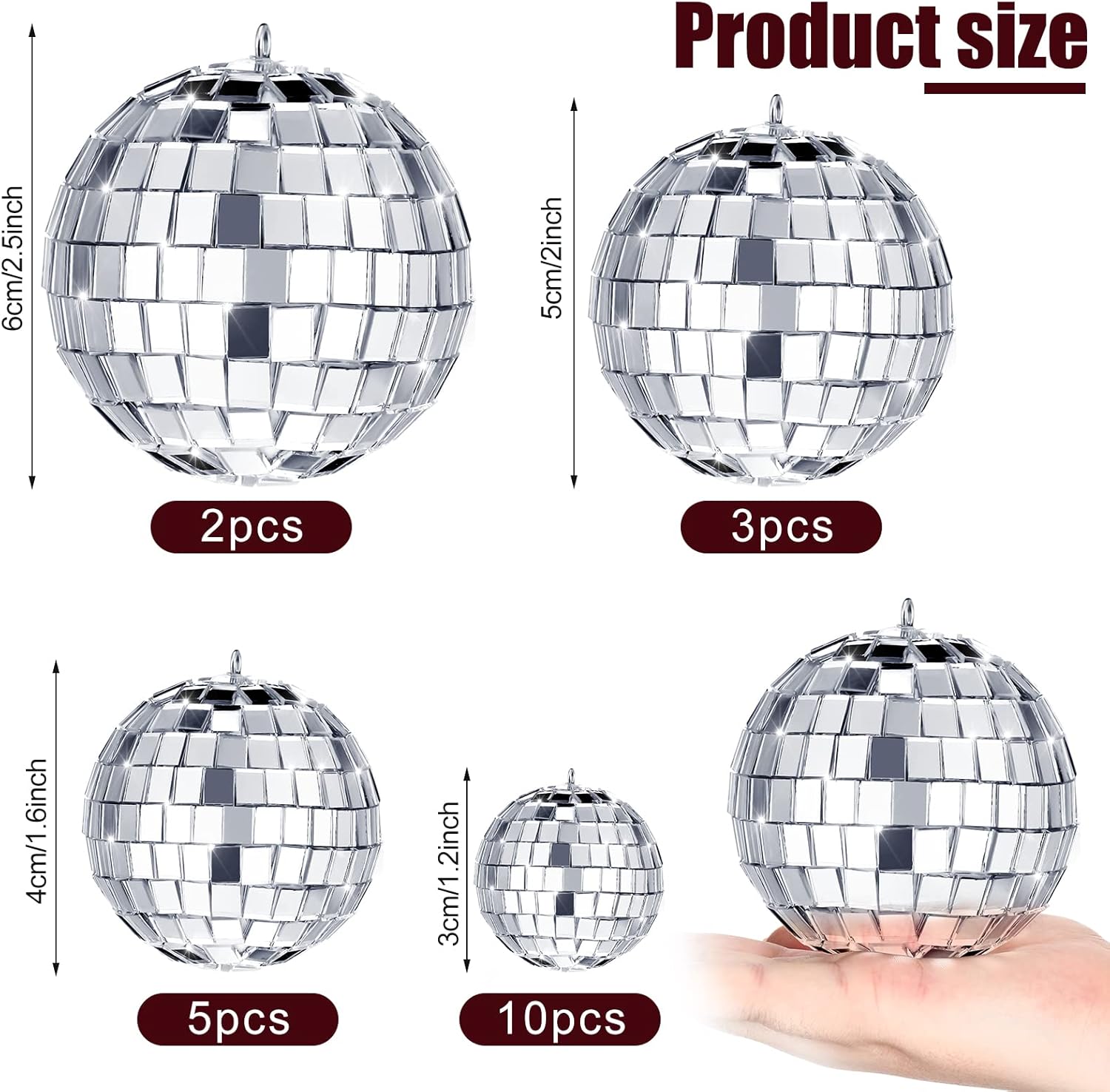
If you’ve ever walked into a party where a spinning mirror ball threw tiny squares of light across every wall and felt the room shift from “living room” to “dance floor” in about four seconds — you already understand why disco ball decoration sets are worth thinking about seriously. A mirror ball is exactly what it sounds like: a sphere (usually 8 to 20 inches in diameter) covered in small mirrored tiles that reflect a single spotlight into hundreds of moving light fragments. When you combine that with colored LED wash lights and a motor to spin it, you get the signature 70s visual effect at almost any budget. This guide is for the reader who already knows the basics and is staring at a real decision: a birthday party next month, a venue with a low ceiling, a $150 budget that needs to stretch, or a home listening room build that deserves something better than a party-store throwaway. We’ll walk through four spending tiers, name the real tradeoffs, and end with clear “if this, then that” calls.
Why Decoration Sets Beat Buying Components Separately (Until They Don’t)
The case for a bundled set is simple economics. A typical disco ball decoration set — the kind sold on Amazon or at Party City in the $25–$80 range — packages a mirror ball, a clip-mount motor, and either one or two LED pin-spot or wash lights into a single box. You plug it in, hang it, and you’re done in under 20 minutes. Apartment Therapy’s guide to disco-themed home parties notes that the visual payoff of even a basic 12-inch mirror ball dramatically outpaces its price point when the room is otherwise dark, which is about as honest a summary as you’ll find.
The case against bundles emerges the moment you need to upgrade one component. The motors in entry-level sets — often rated at 1–2 RPM (rotations per minute, meaning how fast the ball spins) — can’t be swapped easily, and the included LED lights are usually fixed-color rather than RGB (red-green-blue, meaning color-adjustable). Once you’re spending $150+, individual components start making more financial sense because you can mix and match, replace single failed pieces, and match wattage to your room size.
The real decision frame: Are you building a one-night room transformation or a recurring setup? One night: buy the bundle. Recurring or permanent: buy components.
The Four Tiers, Priced for 2026
Here’s the landscape as it sits in mid-2026:
| Tier | Budget | What You Get | Best For |
|---|---|---|---|
| Party Starter | $25–$80 | 8–12” ball + clip motor + 1–2 fixed LED lights | One-time event, kids’ parties, apartment décor |
| Serious One-Timer | $80–$180 | 12–16” ball + quiet motor + RGB wash or pin-spot | Annual party host, home bar setup |
| Home Room Build | $180–$450 | 16–20” ball + variable-speed motor + 2–4 ADJ or Chauvet lights | Dedicated listening room, rec room |
| Professional / Event Grade | $450–$2,000+ | 20”+ ball + DMX-capable motor + full wash/gobo rig | Mobile DJ, venue install, paid events |
Rolling Stone’s 2024 piece on the disco revival noted that demand for mirror balls in the 12–16” range spiked roughly 60% year-over-year through 2023 and 2024, with event supply companies reporting backorders on motors during peak party season (October–December). That demand has stabilized in 2026, which means pricing is rational again — no panic buying required.
Tier 1 and 2: Where Most Readers Actually Are
The $25–$80 Bundle (Tier 1)
The most widely reviewed sets in this range come from brands like Eliminator Lighting and a handful of unbranded imports that cycle through Amazon under various names. Reviewers consistently report that the 8-inch ball looks underwhelming in rooms larger than 300 square feet — the mirrored tiles are typically 5mm squares, which produces a denser, smaller pattern than the classic 70s look. The 12-inch ball in this tier hits closer to the right aesthetic. The included motors are quiet enough for home use but owners frequently note they list over time (the ball tilts off-center), usually within 6–18 months of weekly use.
The LED lights bundled at this tier are almost always “moonflower” style — rotating multi-beam fixtures — rather than true pin-spots. A pin-spot (a tight, focused beam aimed directly at the mirror ball) is what produces the classic disco-light-scatter effect. Moonflower lights produce a different, busier look. If the classic effect matters to you, verify that the set includes a true pin-spot before purchasing.
Our call at Tier 1: For a one-time event in a room under 400 square feet, a 12-inch bundle set does the job. Don’t overthink it.
The $80–$180 Set (Tier 2)
This is the first tier where it’s worth spending an extra 20 minutes buying components separately. A 16-inch mirror ball from a recognized stage-supply vendor (look for American DJ / ADJ or Eliminator Lighting’s standalone balls) costs $40–$70. A variable-speed motor rated for balls up to 20 pounds costs $25–$50. That leaves $60–$90 for an actual pin-spot or a small RGB wash light — enough to buy a decent ADJ Pinspot LED or a budget Chauvet DJ unit.
Wirecutter’s party lights guide (New York Times, 2025 update) consistently flags that pin-spot quality is the single biggest driver of whether a mirror ball looks “right” or just adequate. The beam needs to be tight (under 8 degrees) and bright enough to overpower ambient light. At this tier, the ADJ Pinspot LED 2 (manufacturer-rated at 3W, approximately $45–$55 street price as of mid-2026) gets favorable mentions from owners who’ve used it in living rooms and low-ceiling basements. It’s not a professional fixture, but the beam is focused enough to produce the scattered-light effect cleanly.
Our call at Tier 2: Buy the ball and motor separately, spend what’s left on one good pin-spot. The separate-component route gets you meaningfully better results for the same money.
Tier 3: The Home Room Build
This is where the gap between “party props” and “real lighting gear” becomes visible. A 20-inch mirror ball covered in 10mm mirrored tiles (larger tiles = larger, more sweeping light patterns — this is the “classic” look) weighs 8–12 pounds and needs a motor rated for that load. The standard reference point in DJ Mag’s 2025 budget lighting roundup is the American DJ M-700 motor, rated for balls up to 50 pounds, with variable speed control — street price around $80–$100. Pair that with a 20-inch ball from a stage lighting supplier and you have the anchor piece for under $200.
The remaining $250–$300 at this tier is your lighting budget, and this is where opinions divide. Two good options:
Option A — The Pure Disco Look: Two ADJ or Chauvet DJ par-can LED fixtures aimed at the ball from opposing angles, one warm amber, one cool white. Owners who’ve set this up in home listening rooms report it’s the closest you can get to the original 1970s club effect without DMX programming (DMX is a wiring standard that lets a lighting controller tell multiple fixtures what to do simultaneously — you don’t need it for a home room, but you’ll want it for professional work).
Option B — The Flexible Setup: One pin-spot on the ball plus one ADJ Dotz Par or similar RGBW wash light on a floor stand for general color fill. This setup can double as an actual party rig when guests arrive.
By the numbers:
- 20” mirror ball (10mm tiles): ~$90–$130
- M-700 or equivalent motor: ~$85–$100
- 2× budget par-can LEDs or 1 pin-spot + 1 wash light: ~$80–$180
- Total Tier 3 build: $255–$410
Our call at Tier 3: Option B gives you more use-case flexibility for roughly the same spend. If the room is permanent and purely aesthetic, Option A is the more authentic period look.
Tier 4: When This Becomes a Professional Investment
Mobile DJs and venue installers reading this are already thinking about weight ratings, ceiling rigging hardware, and DMX control. A few things worth naming explicitly:
Rigging is where people cut corners and shouldn’t. A 20-inch mirror ball at 10+ pounds on a standard hook mount is a liability without a secondary safety cable. Professional rigging hardware (rated safety cables, truss clamps, weight-rated ceiling mounts) adds $30–$80 to any build but is non-negotiable for public events or anywhere people will be dancing under the ball. DJ Mag’s lighting coverage consistently flags rigging safety as the most under-discussed topic in DIY lighting setups.
DMX capability changes the value equation. At the $450–$2,000+ range, fixtures like the Chauvet DJ Intimidator Spot or ADJ Vizi series can be triggered by a lighting controller or DJ software to pulse with the music. This is meaningfully different from a static par-can and produces the theatrical effect associated with actual 1970s discotheques. For a mobile DJ billing $800–$2,000 per event, a DMX-capable mirror ball rig with a single-universe USB controller (the ADJ MyDMX Go or equivalent, around $200–$300) is a recurring visual asset that commands premium pricing over a DJ without one.
Our call at Tier 4: If you’re doing more than four paid events per year, the DMX-capable rig pays for itself inside a season and becomes a differentiator. Below four events, Tier 3 components with manual control are the more rational spend.
The Decision Rules, Written Out
- You’re throwing one party in the next 60 days: Buy a 12-inch bundle set under $80. Don’t overthink it.
- You host an annual event or want a semi-permanent home bar look: Spend $120–$180 on separate components — 16-inch ball, variable motor, one real pin-spot.
- You’re building a dedicated listening room or rec room: The Tier 3 build at $255–$410 is the right investment. Buy once, use for years.
- You’re a working mobile DJ or venue operator: DMX-capable fixtures and proper rigging hardware are table stakes. The cost-per-gig math favors premium gear inside the first season of regular bookings.
The 70s aesthetic is genuinely durable — Rolling Stone’s 2024 disco revival coverage makes a convincing case that this isn’t a trend cycle but a permanent fixture in event culture. That means whatever you buy at the right tier will earn its keep. Buy to the use case, not to the ceiling of your budget, and the room will do the rest.